What makes a daily note searchable?
Concrete names, places, dates, decisions, and memorable phrases work better than vague summaries such as “good day.”
Daily logging
Build daily notes that are short enough to maintain and specific enough to search later.
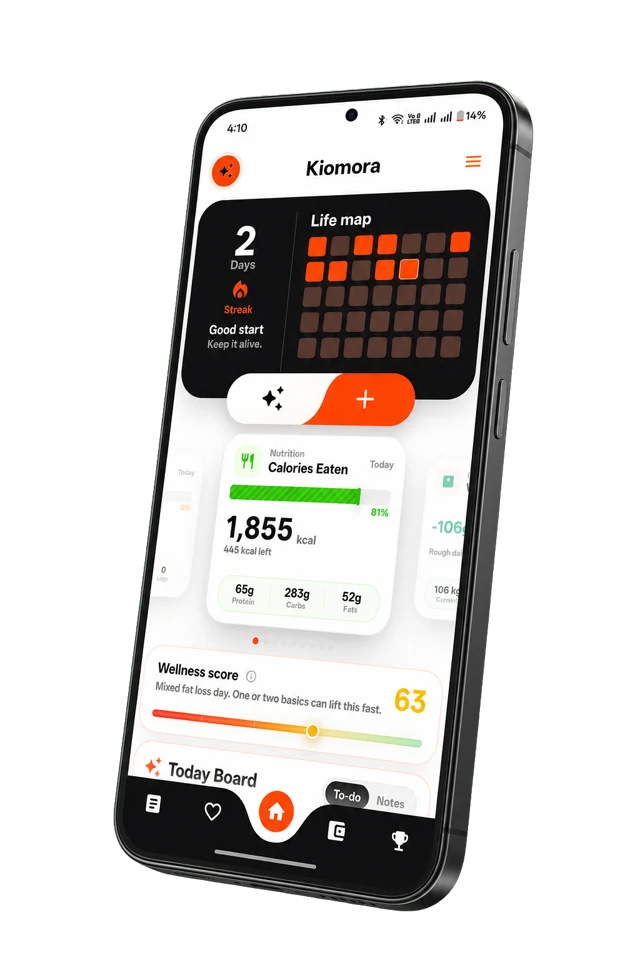
Kiomora for daily context
Keep daily notes system beside the rest of the day that gave it meaning.
Explore KiomoraStart with a small set of fields that can answer a future question. Add detail only after the routine becomes stable.
Useful for people who want a lightweight daily journal for events, people, decisions, and memories.
Write the fact in the same format each time so it stays easy to scan.
Add timing or frequency when it changes how you understand the entry.
Use a small repeatable scale or a short label instead of chasing precision.
Keep one plain-language note for the context a number cannot preserve.
Search for the names, places, decisions, and changes you expected to remember. If the note is hard to find a week later, use more concrete words in the next entry.
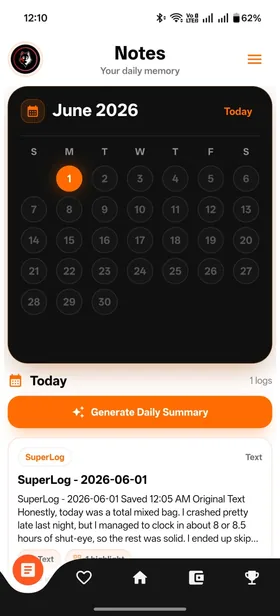
Completed example
Met Maya at Blue Tokai after work. She accepted the new role in Pune. Remember the story about her first interview and check in next Friday.
Notes containing a useful date, person, place, decision, or event divided by notes reviewed.
8 of 10 notes contain at least one concrete retrieval detail, giving 80% searchable coverage.
Concrete names, places, dates, decisions, and memorable phrases work better than vague summaries such as “good day.”
Leave the gap visible. Do not silently replace it with zero. Note planned rest when it matters, then calculate rates only across the days that match the question.
Build connected context
One category rarely explains a whole day. Add another record only when it helps answer a question you actually expect to ask.
Capture mood, energy, stress, and daily context without turning a feeling into a diagnosis.
Read guide Life adminCapture everyday spending quickly while preserving the reason behind unusual purchases.
Read guide Work and attentionTrack focused minutes, completed priorities, interruptions, and energy without reducing a useful day to hours worked.
Read guideDon't forget to try Kiomora
Connect this record with the rest of your day and the memories around it.
Explore KiomoraUse the matching free resource to test a smaller routine before committing to a long tracking system.
Explore SuperLog in Kiomora