Evidence-based guide
How to Track Memories, Not Just Metrics
Keep the people, places, decisions, and moments behind your daily scores so your life record remains meaningful months later.
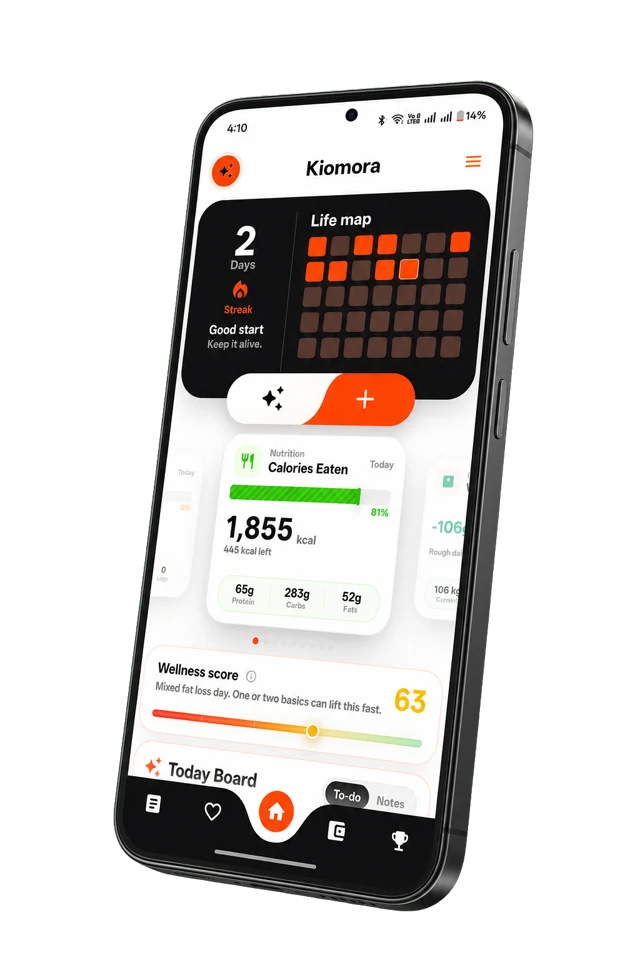
Kiomora for daily context
Your life, connected
Keep habits, wellness, spending, notes, and memories together so the details stay useful later.
Explore KiomoraA mood score can show that Tuesday was a seven. It cannot tell you whether the day felt good because of relief, connection, progress, weather, music, or an unexpected conversation.
Metrics are useful because they are compact and comparable. Memories are useful because they preserve meaning. A durable life record needs both.
The texture gap in self-tracking
One widely discussed frustration among long-term trackers is ending the year with excellent statistics and almost no sense of the person behind them. A spreadsheet can show completed workouts and average sleep while losing who was present, what changed, and which ordinary moment became important later.
This is not an argument against measurement. It is an argument for pairing measurement with context.
Five fields that preserve a memory
- What happened? Use a concrete action, not a vague label.
- Who or where? Names and places are strong retrieval cues.
- What changed? Capture a decision, surprise, beginning, or ending.
- Why did it matter? One sentence is enough.
- What detail would bring it back? Preserve a phrase, image, sound, or small observation.
You do not need all five every day. The free Daily Life Tracker Template includes a single “moment to remember” field for a lighter routine.
Connect a memory to the day’s metrics
Keep the note on the same timeline as sleep, food, movement, spending, mood, and habits. Later, the record can answer both “what was my average?” and “what was happening then?” without pretending that two co-occurring events prove cause.
Use questions as a retrieval test
After a week, ask questions that require real context:
- What made Friday memorable?
- Which people appeared in my strongest days?
- What changed before I started a new routine?
- Which purchase had a story behind it?
- What am I glad I wrote down?
If the record cannot answer, change the capture template. Read the Ask Your Life Data guide to see why grounded retrieval should point back to saved records.
Do not capture everything
Total capture creates privacy, attention, and retrieval costs. Choose the parts of life you expect to revisit. Leave room for forgetting, and keep sensitive material only in a system whose storage, deletion, access, and AI-processing practices you understand.
A meaningful archive is curated. Its purpose is not to prove that every minute happened. It is to help your future self recover the moments and context that would otherwise be difficult to find.
Sources and further reading
- Community discussion: a year of metrics without memories
- Ten Questions in Lifelog Mining and Information Recall
Common questions
Practical answers before you begin
- How can I track my life without reducing it to numbers?
- Pair every important score with a short context note, and preserve people, places, decisions, changes, and one memorable detail.
- What is the difference between a tracker and a journal?
- A tracker emphasizes repeatable fields and comparison. A journal preserves narrative and meaning. A useful life record can combine both without requiring a long entry every day.
- What should I write in a memory log?
- Record what happened, who was involved, where it happened, why it stood out, and a concrete sensory or conversational detail you may want later.
Don't forget to try Kiomora
See more thanone detail
Keep the useful parts of each day in one record you can return to.
Explore Kiomora