Can I change the definition midway?
Record the change and begin a new comparison period. Mixing two definitions makes the completion rate difficult to interpret.
Flexible habit tracking
Define one personal habit with a stable completion rule, target days, intentional rest, and a context note.
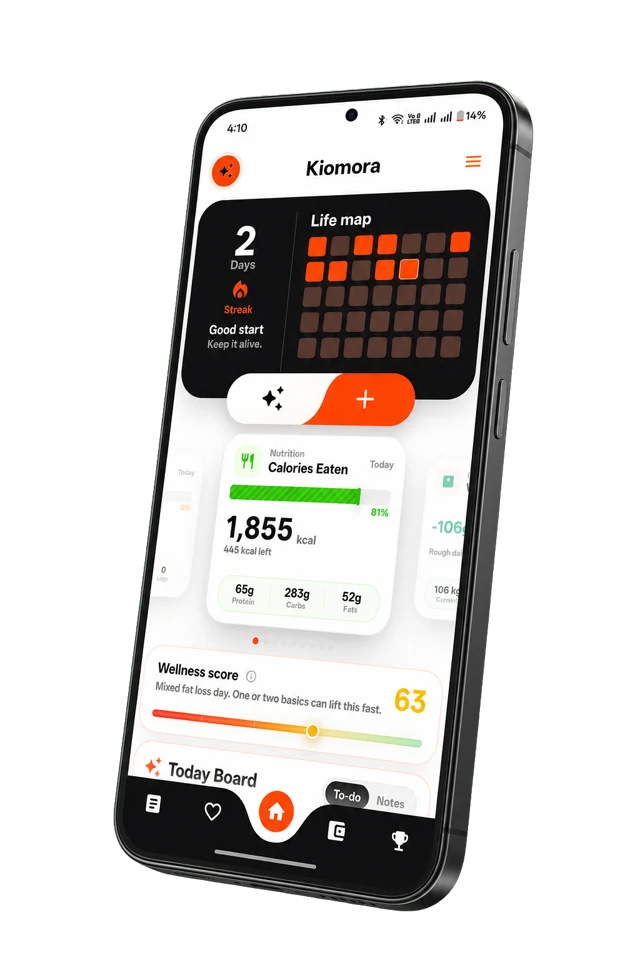
Kiomora for daily context
Keep custom habit tracker beside the rest of the day that gave it meaning.
Explore KiomoraStart with a small set of fields that can answer a future question. Add detail only after the routine becomes stable.
Useful when a meaningful routine does not fit a preset tracker category or needs a definition specific to your life.
Write the fact in the same format each time so it stays easy to scan.
Add timing or frequency when it changes how you understand the entry.
Use a small repeatable scale or a short label instead of chasing precision.
Keep one plain-language note for the context a number cannot preserve.
Calculate completion only across planned days. Read missed-day notes and bounce-backs, then change the target or setup between review periods rather than moving the definition daily.
Completed example
Phone-free meal means the phone stays outside the room from the first bite until the meal ends. Target: one meal daily. Travel meals count as not planned.
Completed planned days divided by planned days, multiplied by 100.
18 completions across 24 planned days gives 75%. Not-planned days are excluded.
Record the change and begin a new comparison period. Mixing two definitions makes the completion rate difficult to interpret.
Leave the gap visible. Do not silently replace it with zero. Note planned rest when it matters, then calculate rates only across the days that match the question.
Build connected context
One category rarely explains a whole day. Add another record only when it helps answer a question you actually expect to ask.
Track routines you are actively practicing without letting imperfect streaks erase useful progress.
Read guide Work and attentionTrack focused minutes, completed priorities, interruptions, and energy without reducing a useful day to hours worked.
Read guide Daily loggingBuild daily notes that are short enough to maintain and specific enough to search later.
Read guideDon't forget to try Kiomora
Connect this record with the rest of your day and the memories around it.
Explore KiomoraUse the matching free resource to test a smaller routine before committing to a long tracking system.
Create a printable custom tracker