Evidence-based guide
50 Daily Reflection Prompts for a Useful Check-In
Use 50 specific daily reflection prompts for reviewing your day, energy, habits, relationships, memories, gratitude, and tomorrow.
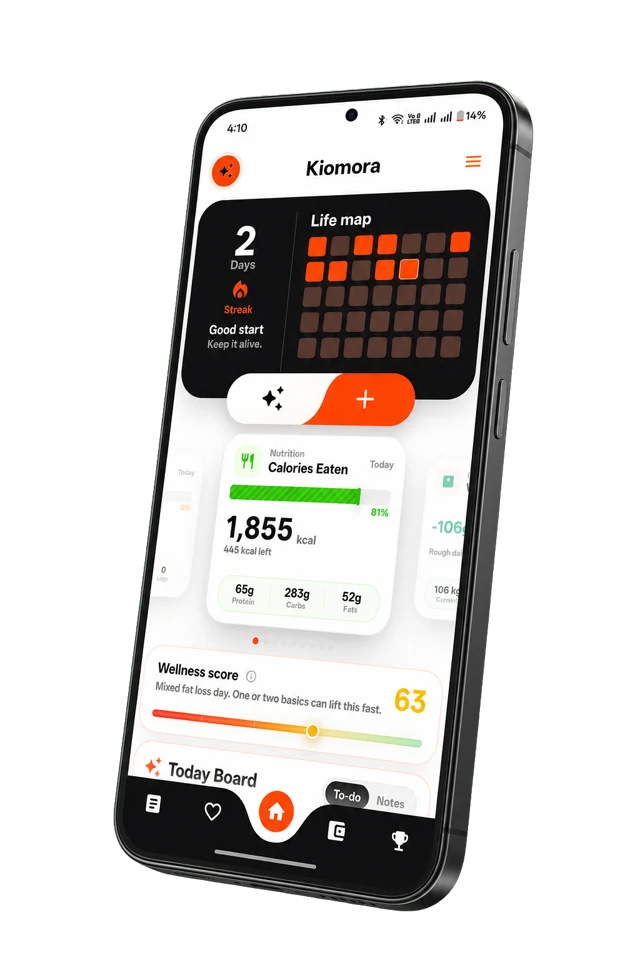
Kiomora for daily reflection
Reflect. Remember.
Capture a short reflection beside the people, routines, and events that shaped the day.
Explore KiomoraA blank journal page asks you to decide both what matters and how to begin. A daily reflection prompt removes the first decision. The best prompt does not force a profound answer. It gives you a small doorway into a real event, feeling, routine, person, or decision from the day.
If you want one question instead of a long list, use Kiomora’s free daily reflection prompt generator. Choose a focus and writing time, then get a prompt, a follow-up, and a private writing space in your browser.
How to use these prompts
Choose one question, set a short timer, and answer with at least one concrete detail. “Work was stressful” is difficult to revisit. “The client call at 3 PM ran over, so I skipped the walk that usually resets my attention” gives your future self useful context.
You do not need to finish a full category. Repeat a question when it keeps producing useful entries. Skip a question when it feels irrelevant or pushes you toward a subject you do not want to explore alone.
10 prompts to review the day
- What is one moment from today you do not want to lose?
- What took more energy than you expected?
- What felt easier than expected, and what helped?
- Where did the day go differently from the plan?
- What decision shaped the rest of the day?
- What did you finish that deserves to be acknowledged?
- What did you leave unfinished, and does it still matter?
- What did you notice about your mood or attention?
- What ordinary detail would be hard to remember next month?
- If today had a title, what would it be?
8 prompts for energy and attention
- When did your energy feel highest today?
- When did your attention begin to scatter?
- What activity held your focus without much effort?
- Which interruption mattered, and which one was only noise?
- What restored you, even briefly?
- What part of the day felt rushed?
- What did your strongest hour have that your weakest hour did not?
- What is one condition you want to recreate tomorrow?
8 prompts for habits and routines
- Which routine happened almost automatically today?
- What cue helped one useful action begin?
- Which habit did you skip, pause, or choose not to do?
- Was a missed habit caused by friction, a changed priority, or needed rest?
- Where would a smaller version of the routine fit better?
- What made one useful choice easier?
- Which routine still fits your life now?
- What should you keep, change, pause, or release this week?
8 gratitude prompts that stay specific
- What ordinary thing made today a little easier?
- Who helped you in a small but useful way?
- What place gave you comfort, focus, or belonging?
- What ability did you rely on without thinking about it?
- What meal, sound, view, or conversation did you enjoy?
- What part of your current routine would a past version of you appreciate?
- What problem did not happen today?
- What difficulty has taught you something without needing to be called good?
8 prompts for people and memories
- Which conversation stayed with you today?
- What sentence do you want to remember accurately?
- Who would appreciate a short message from you?
- When did you feel understood this week?
- Where did you make an assumption instead of asking?
- What made you laugh recently?
- What object tells a story about your life right now?
- What has become normal that once felt new?
8 prompts for tomorrow
- What is the one thing tomorrow needs to feel useful?
- What can you prepare tonight in less than five minutes?
- What deserves your best attention tomorrow?
- What can receive less attention?
- Which likely interruption can you plan around?
- What would a kinder plan for tomorrow look like?
- What can you say no to before the day begins?
- If tomorrow changes unexpectedly, what would still make it worthwhile?
A two-minute daily check-in
If 50 questions feel like another task, use the same three-line format for a week:
- Remember: one moment, person, or detail from today.
- Notice: one thing that affected your energy, attention, or mood.
- Next: one small action or intention for tomorrow.
This is enough structure to compare days without turning reflection into a scorecard. The entry can stay in a notebook, notes app, or daily log app. The important part is that you can find it later.
Daily reflection is not the same as therapy
Daily reflection can be light and factual. Expressive writing research often studies a more specific activity: people writing about difficult experiences for a set period under structured instructions. Findings vary by population and context. For example, one randomized study found changes in self-distancing after expressive writing, while another trial during the COVID-19 pandemic found higher short-term distress and no later group benefit. A prompt page cannot tell you which kind of writing is appropriate for you.
If a question increases distress, stop, switch to a neutral record of the day, or reach out to a qualified professional or trusted person. A personal journal is not a replacement for mental-health care.
Make the reflection useful later
Dates are automatic in most journals, but retrieval improves when you also preserve concrete language: names, places, projects, routines, and decisions. During a weekly review, search for repeated contexts instead of trying to prove that one factor caused another.
For a simple routine, pair this list with the daily log guide and the weekly life review template.
Sources and further reading
- Park, Ayduk, and Kross: expressive writing and self-distancing
- Marković, Bjekić, and Priebe: randomized expressive writing trial during COVID-19
Common questions
Practical answers before you begin
- What is a good daily reflection question?
- A useful question is specific enough to answer from one real day. Start with “What is one moment from today I do not want to lose?” or “What took more energy than expected?” and include one concrete detail.
- Should I use the same reflection prompts every day?
- You can repeat a small core check-in for comparison and rotate one deeper question for variety. Consistency helps review, while a rotating prompt can surface context your standard fields miss.
- How long should a daily reflection take?
- Two to ten minutes is enough for many people. Choose a length you can repeat and stop once the entry contains the detail you would want later.
Don't forget to try Kiomora
See more thanone detail
Keep the useful parts of each day in one record you can return to.
Explore Kiomora