Evidence-based guide
How to Find Patterns in Your Life Data Without Fooling Yourself
Use consistent daily records, comparison windows, context notes, and careful questions to notice personal patterns without treating correlation as proof.
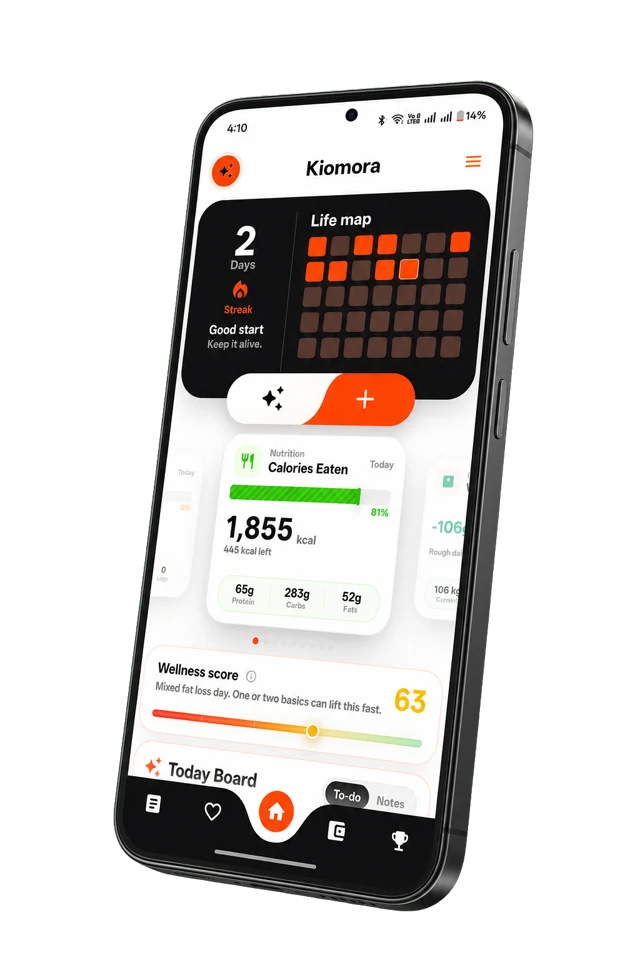
Kiomora for daily context
Your life, connected
Keep habits, wellness, spending, notes, and memories together so the details stay useful later.
Explore KiomoraA visible pattern is the beginning of a question, not the end of an investigation. If your strongest study days also followed longer sleep, that does not prove sleep alone created the result. Workload, location, stress, illness, and the accuracy of the entries may also matter.
1. Make the records comparable
Use the same definition across the review window. If “focused work” includes lectures on Monday but only uninterrupted writing on Tuesday, the totals do not describe the same thing.
Keep units, time windows, rating scales, and planned days stable. Mark missing information as missing instead of estimating it from memory.
2. Compare similar days
A weekday and a holiday may belong to different contexts. Compare workdays with workdays, planned habit days with planned habit days, or similar study sessions before combining everything into one average.
Useful groupings may include location, weekday, travel, exam period, illness, or whether the day followed the normal routine.
3. Read the entries behind the number
An average hides the most unusual days. Inspect the highest, lowest, and missing values with their notes. One disrupted night, deadline, celebration, or travel day may explain why the weekly total changed.
4. Separate association from cause
The NIST statistical handbook explains correlation as a measure of linear association between variables. It does not establish that changing one variable will cause the other to change.
Rewrite confident conclusions as testable questions. Replace “late coffee ruined my sleep” with “on the days recorded, later coffee and shorter sleep appeared together; does the pattern remain across comparable weeks?”
5. Use a weekly review
- Which days were most different from the rest?
- Which entries are missing or based on estimates?
- What context repeatedly appeared beside the outcome?
- What alternative explanation could fit the same record?
- What is one small change to observe next week?
Use the weekly life review template for a repeatable process. For two numeric columns, the private Personal Analytics Sandbox can calculate a correlation while keeping the same cautions visible.
Common questions
Practical answers before you begin
- How do I find patterns in my personal data?
- Use consistent definitions, compare similar days, keep unusual context visible, and inspect the original entries behind any average or summary.
- How many days of data do I need?
- There is no universal number. Seven days can reveal logging gaps and schedule differences, while stronger or less frequent patterns may require several comparable weeks.
- Does correlation prove that one habit caused another result?
- No. A correlation can suggest a question worth testing, but other changes, missing data, reverse direction, or coincidence may explain it.
Don't forget to try Kiomora
See more thanone detail
Keep the useful parts of each day in one record you can return to.
Explore Kiomora