Evidence-based guide
What Should You Track Every Day? Start With Five Useful Fields
Choose a small set of daily tracking fields for routines, energy, memories, spending, and progress without trying to measure your entire life.
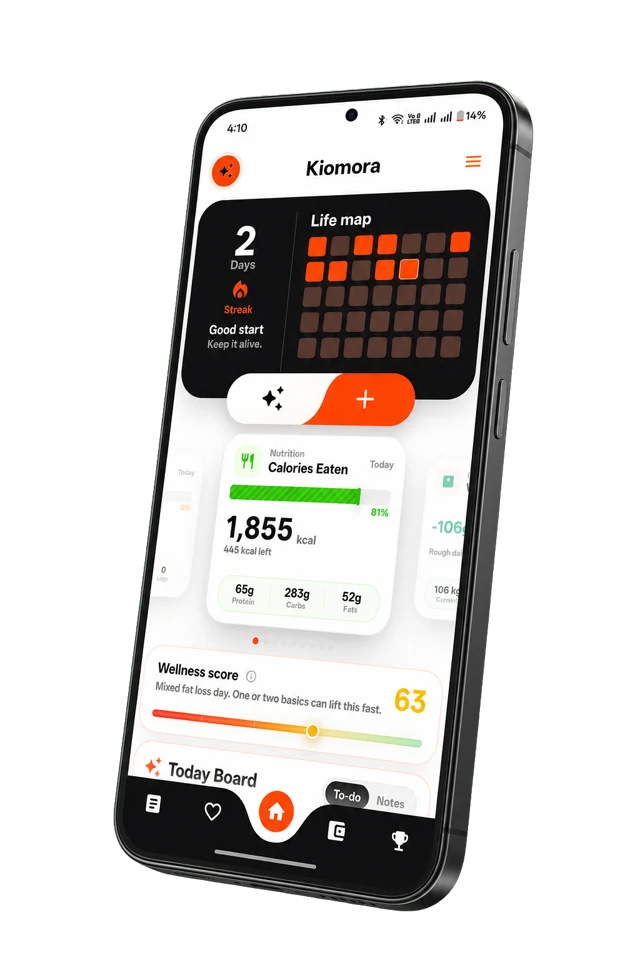
Kiomora for daily context
Your life, connected
Keep habits, wellness, spending, notes, and memories together so the details stay useful later.
Explore KiomoraThe best daily tracker is not the one with the most fields. It is the smallest record that helps you answer a real question later.
Trying to record sleep, meals, water, mood, habits, expenses, exercise, focus, screen time, symptoms, gratitude, and every task from the first day usually creates a second job. Start with five fields or fewer.
Five useful daily tracking fields
- What happened. Preserve one event, task, decision, or change.
- One routine. Track the habit that currently matters, not every habit you might improve someday.
- Energy or mood context. Use a small consistent scale and one short note. Treat it as reflection, not diagnosis.
- One moment worth remembering. Include a person, place, conversation, or small win.
- One goal-specific field. Choose sleep duration, focused minutes, spending, movement, study time, or another concrete measure connected to a current question.
Begin with a question, not a dashboard
“Track my life” is too broad. A narrower question creates a better record:
- When do I find it easiest to study without interruption?
- Which expenses keep surprising me at the end of the month?
- What do I want to remember about this semester?
- What usually happens before I skip a planned habit?
Each question suggests a small set of fields. Study focus might need start time, focused minutes, location, and interruption notes. It does not automatically need calories or water intake.
What should you avoid tracking?
Avoid a field when you do not know how you will use it, when the capture burden outweighs the value, or when recording it creates anxiety without supporting a constructive decision.
Personal wellness records should not label readings or feelings as a diagnosis. Use suitable devices and qualified professional advice for medical interpretation.
A seven-day starting plan
- Choose one question you want the week to answer.
- Select three to five fields.
- Use the same wording and scale for seven days.
- Accept gaps instead of reconstructing details you do not remember.
- Review which fields actually helped.
- Remove one field before adding another.
Explore 30 life logging ideas if you need options, or use the personal tracking plan to design a smaller system around one question.
Common questions
Practical answers before you begin
- What are the best things to track daily?
- A useful starting set is one daily event, one routine, energy or mood context, one meaningful moment, and one field connected to a current goal.
- How many things should I track?
- Begin with three to five fields. Add another only when the existing record repeatedly leaves an important question unanswered.
- Do I need to track every day?
- No. A record can remain useful with gaps. Consistent definitions matter more than a perfect streak.
Don't forget to try Kiomora
See more thanone detail
Keep the useful parts of each day in one record you can return to.
Explore Kiomora