Evidence-based guide
A Life Tracker for People Who Hate Tracking
Reduce tracking friction with natural capture, a minimum useful record, flexible gaps, and reviews that return something valuable.
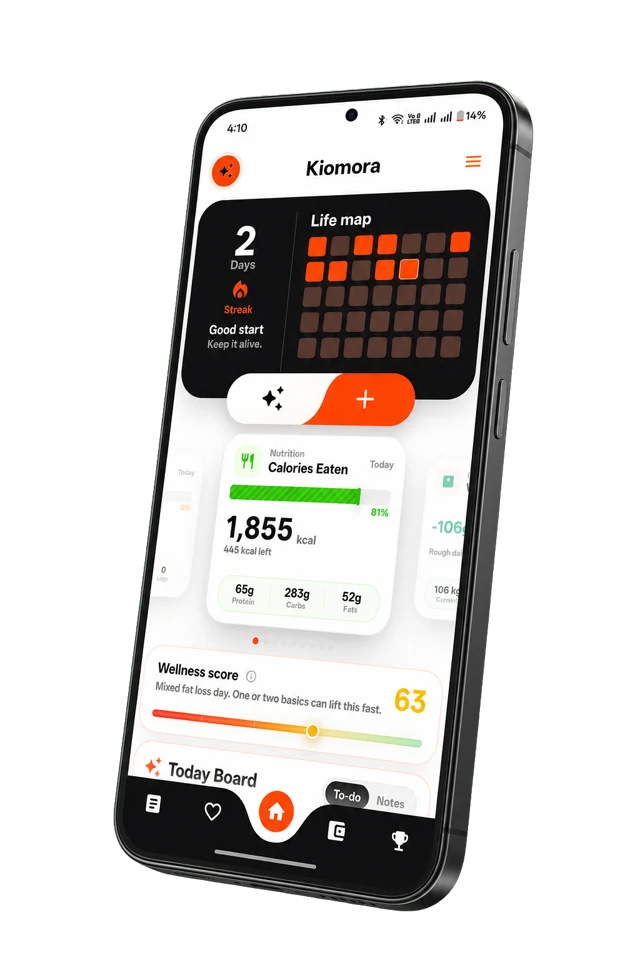
Kiomora for daily context
Your life, connected
Keep habits, wellness, spending, notes, and memories together so the details stay useful later.
Explore KiomoraIf you repeatedly download trackers and abandon them, the problem may not be discipline. The workflow may simply ask too much before it gives anything useful back.
Tracking competes with the life it is meant to record. The more menus, exact quantities, mandatory fields, and separate categories a person must navigate, the easier it becomes to postpone an entry until its context is gone.
Friction is the real competitor
Recent user discussions about voice food logging describe the tradeoff clearly: people want to capture a meal while cooking or caring for children, but a voice feature that still requires several taps or produces entries in the wrong category can take longer than typing. The lesson is not “voice always wins.” It is that capture must fit the moment and remain easy to correct.
A useful tracker should support several paths:
- text when precision and privacy matter;
- voice when hands are busy or the update is conversational;
- a photo when visual context is faster than description;
- quick manual controls for repeated actions;
- a review step before uncertain interpretations become saved facts.
Build the one-minute version first
Write the shortest entry that could still help your future self. A one-minute life log might contain only:
- energy or mood in one word;
- the main thing that happened;
- one structured fact connected to your goal;
- one detail worth remembering.
Use the free daily life tracker template once, then remove anything you would resent completing tomorrow.
Let gaps exist
Streaks can be motivating, but they can also turn a missed day into a reason to stop fully. Treat an empty day as missing data, not a personal verdict. If rest matters to the story, record rest as its own state instead of pretending every day should look active.
Kiomora’s free Habit Bounce-Back Calculator treats intentional rest and unplanned days as neutral instead of counting every gap as failure.
Capture first, organize second
When several things happen together, describe them together. Software can propose separate cards after the fact, but you should retain the ability to fix the category, time, amount, or wording. This keeps low-friction capture from becoming low-quality data.
Make the review pay back the effort
A tracker becomes easier to maintain when it returns something concrete: a forgotten moment, a weekly summary, a clear count, or a grounded answer pointing back to saved entries. If the review never changes a decision or helps you remember, shrink the tracker or stop using it.
The sustainable question is not “How can I force myself to log more?” It is “What is the smallest record that gives me something worth returning to?”
Sources and further reading
- User feedback on voice logging friction and hands-busy capture
- Discussion: logging effort versus remembering to log
Common questions
Practical answers before you begin
- Why do I keep quitting tracker apps?
- The routine may demand more effort than the review gives back. Reduce fields, attach capture to an existing moment, and make sure the record answers a question you care about.
- Is voice logging easier than typing?
- It can be easier when your hands are busy or a thought is easier to say, but it is not universally better. A good system offers text, voice, photo, and quick manual correction.
- Do I need to log every day?
- No. Consistency helps some comparisons, but an honest partial record is more useful than invented completeness. Design gaps and rest days into the system.
Don't forget to try Kiomora
See more thanone detail
Keep the useful parts of each day in one record you can return to.
Explore Kiomora